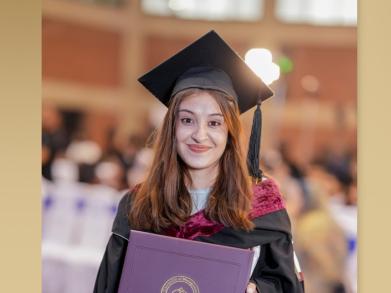



Suleman Dawood School of Business (SDSB) is organising a PhD Management Dissertation Defence, “Talent Management and Transgenerational Succession in Family-owned Firms” by Zainab Anjum, Candidate PhD Management.
May 22, 2026
Time:
10 am
Faculty Lounge, 4th Floor, SDSB
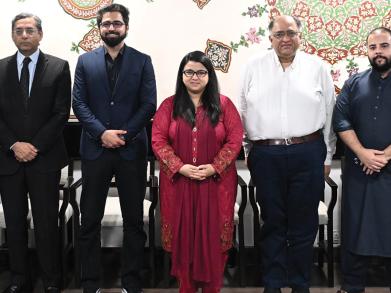
Dissertation Defence Committee
Dr. Jawad Syed - Supervisor & Chair
Dr. Faiza Ali – Member SDSB
Dr. Muhammad Abdur Rahman Malik – Member SDSB
Dr. Ummad Mazhar – Member SDSB
Dr. Syed Zahid Ali ‐ Member (LUMS)
Dr. Amani Moazzam - External Examiner (PU)
Abstract
This thesis examines the multilayered factors of talent management (TM) and transgenerational succession (TS) in family-owned firms (FOFs). TM and TS, as individual research streams, have garnered considerable scholarly attention, especially the factors that influence them. Yet, studies remain insular treating these factors in isolation and overlooking their dynamic interactions that collectively shape talent and succession management. These factors are generally assumed to have direct linear relationships with TM and TS, even though research suggests that relationships are far more complicated. Also, family business literature generally overlooks a possible parallel examination of these research streams. To fill these gaps, this thesis contends that factors affecting TM and TS in FOFs are multi-dimensional and interconnected in nature and cross-level combinations (rather than isolated single-level conceptualizations) of factors influence outcomes- TM and TS. This thesis uses a relational, multilevel perspective and means-end chain perspective to investigate the overarching research question: What are the key factors that influence talent management and transgenerational succession in family-owned firms? Both perspectives maintain that influencing factors (whether relational or hierarchical) are interconnected across multiple levels and different combinations of factors collectively influence TM and TS. This thesis first systematically reviews literature on TM to develop a holistic understanding of the relational, multilevel factors that are associated with TM in general. It then systematically reviews TS research to understand factors associated with TS in FOFs. The thesis, then, draws on 35 in-depth semi-structured interviews with CEOs, family shareholders, family successors and non-family professionals to examine the multilevel influences of societal, organizational and individual inhibitors and facilitators of TM and TS in FOFs and their interconnectedness. It uncovers unique macro-socioeconomic inhibitors and facilitators (gender inequality, patriarchy and baradari or clan culture) that have not been looked at in detail in previous research. Also, it uses means-end chain perspective to uncover hierarchical factors such as FOF attributes, individual benefits that family successors (FSs) and non-family professionals (NFPs) derive from these attributes and how these benefits help achieve their end goal or personal values. By uncovering unique and overlapping firm attributes (autonomy, compensation and travel exposure) for both FSs and NFPs with multiple paths to TM and TS, this thesis directs research attention to ways in which FOFs may design common and targeted talent and succession strategies. Findings from this thesis offer practical implications for institutional policy makers (government) and practitioners (family owners, successors, and professionals), focusing on policies to mitigate cultural impediments, institutional strengthening, global competitiveness, and industry benchmarking. Overall, this thesis presents a contextualized, multilevel and relational understanding of TM and TS in FOFs.