

SAHSOL Law Clinic on Gender Equality Publishes its Final Report: The Woman in the Judgment: Gender, Rights, and Judicial Reasoning in Pakistan


The Shaikh Ahmad Hassan School of Law (SAHSOL) marks the successful completion of its Law Clinic on Gender Equality and the publication of its final report, The Woman in the Judgment: Gender, Rights, and Judicial Reasoning in Pakistan.
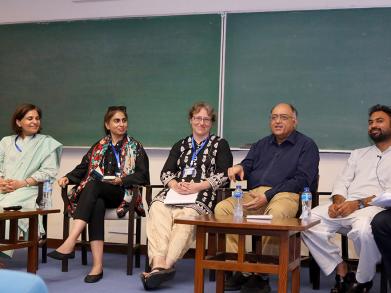
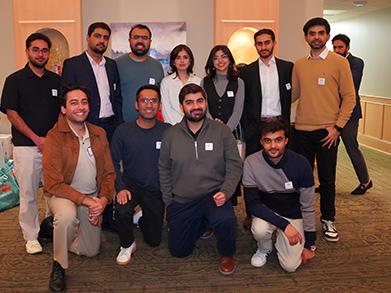
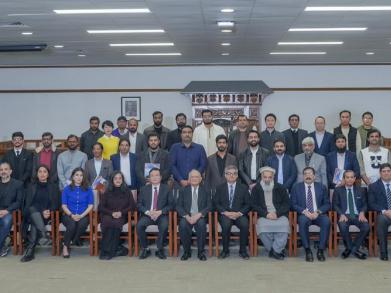
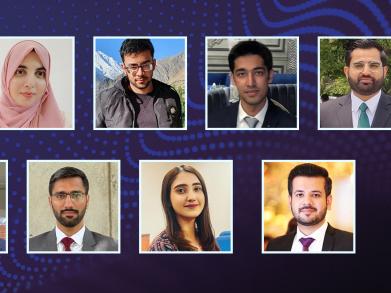
Conducted under the supervision of Prof. Justice (R) Syed Mansoor Ali Shah in collaboration with IE University, Madrid, the Joint LUMS–IE Law Clinic on Gender Equality and the Right to Non-Discrimination brought together students from Pakistan and Spain to examine how courts engage with gender, rights, and social context, and whether progressive judicial reasoning can translate into meaningful institutional and societal change. The SAHSOL student clinicians who contributed to this work were Areesha Qadeer, Ayesha Zafar, Daniyal Khan, Ghulam Habib, Hassan Tahir Alvi, Muhammad Ali Kumail, Sara Naseer, and Zara Zahid Khan, whose collective research, analysis, and field engagement formed the foundation of the report.
The report examines approximately 48 judgments spanning nearly seven decades of Pakistani jurisprudence across four thematic areas: family law, workplace harassment, gender-based violence, and public law. The research was complemented by field engagement with sitting and retired judges, lawyers, and civil society practitioners, enabling the student clinicians to connect legal doctrine with the realities of those navigating the justice system.
Reflecting on the experience, Prof. Justice (R) Syed Mansoor Ali Shah described the report as the product of a rewarding comparative collaboration between SAHSOL, LUMS, and IE University. “The real compliments belong to the students in both Pakistan and Spain, whose research, comparative analysis, fieldwork and intellectual engagement made this report possible.” He further emphasised the value of cross-border clinical legal education in exposing students to comparative thinking, connecting legal doctrine with lived realities, and demonstrating how legal education can contribute directly to institutional reform.
Ayesha Zafar and Muhammad Ali Kumail, student clinicians on the project, reflected on their experience of the clinic as one of sustained intellectual engagement, collaboration, and learning beyond the classroom. For Zafar, the experience underscored the importance of looking beyond the courtroom to assess the broader impact of judicial reasoning: “A progressive judgment is only as meaningful as the change it creates beyond the courtroom.”
Kumail reflected on the collective nature of the work, recalling, “Months of research, countless discussions, fieldwork, revisions, and a lot of learning, and somehow, we enjoyed every bit of it.”
The report represents the culmination of a rigorous, collaborative, and experiential research process, demonstrating the value of clinical legal education in connecting students with contemporary questions of law, justice, and social change.
LUMS congratulates the student clinicians, faculty supervisors, and partner institutions on this significant achievement.